Travel Visas
Do I Need an eVisa, ETA, or Visa? How an AI Assistant Answers It Instantly
The answer to “do I need a visa” depends on three things: your passport, your destination, and the purpose of your trip. An ETA is a short online pre-clearance for visa-exempt travelers.
An eVisa is a visa you apply for online, and it requires more documentation. A traditional visa is the full application process, sometimes including an interview at a consulate. Sorting out these differences quickly matters, and that is where technology helps.
An AI visa assistant for travelers answers the question for your exact trip in seconds, so you know what you need without the guesswork.
To work out what you need, ask three simple questions:
- Is your nationality visa-exempt for the destination?
- Does the destination run an ETA scheme?
- Is your trip for tourism or business purposes?
The combination of those answers determines whether you need an ETA, an eVisa, or a full visa.
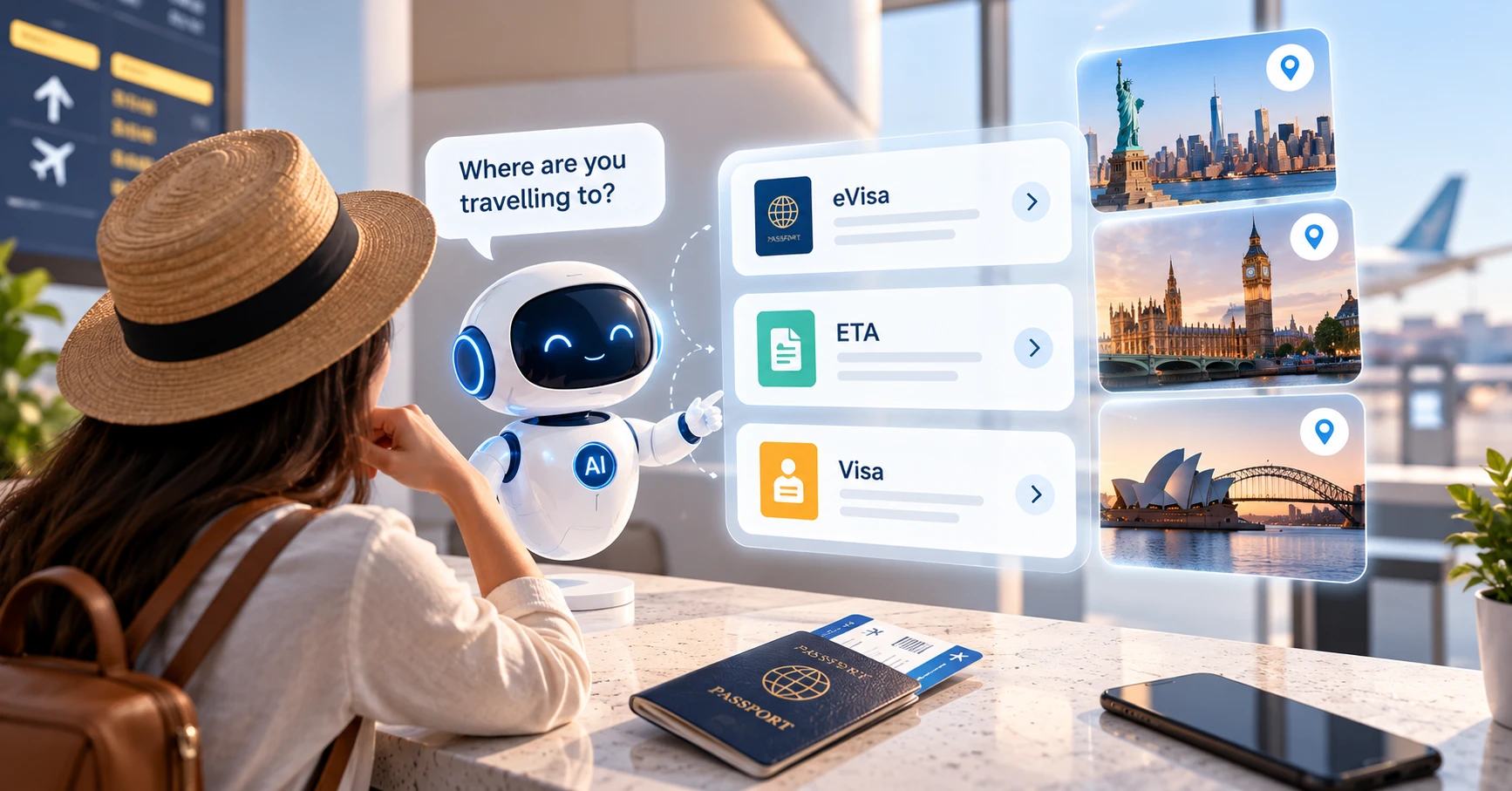
What is an eVisa? What is an ETA? What is a visa?
What is an eVisa?
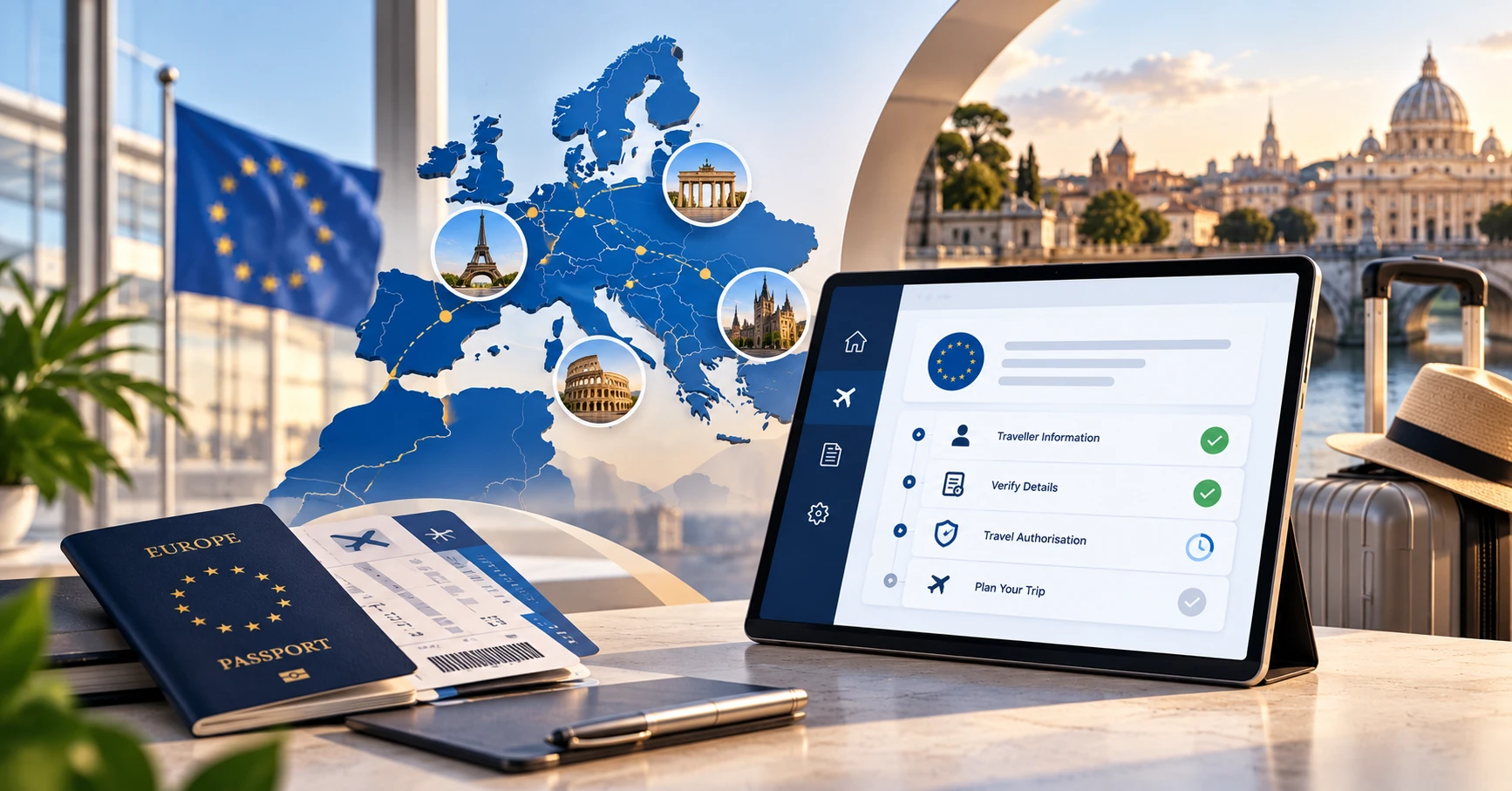
An eVisa (electronic visa) is a full visa obtained through an online application system. It requires supporting documentation, including a copy of your passport, a photo, an itinerary, and in some cases proof of funds or an invitation letter. Processing usually takes several days.
Quotable definition:
“An eVisa is a visa applied for and issued electronically. It has the same legal status as a conventional visa.”
Examples: India e-Visa (tourist, business, medical), Vietnam eVisa and Turkey eVisa.
Travelers have to apply in advance, and approval is either linked to the passport or issued as a PDF or QR code. That is why guides are so keen to clarify what an eVisa is: it is not a shortcut, it is the visa process in digital form.
What is an ETA?
An ETA (Electronic Travel Authorization) is pre-travel permission for visa-exempt nationals. It is quicker and needs less documentation. Decisions often come back within hours, though they can take up to three working days.
Quotable definition:
“An ETA is an Electronic Travel Authorization that allows visa-exempt travelers to be pre-screened before boarding.”
Examples: US ESTA, UK ETA, Canada eTA, Australia ETA.
The EU's forthcoming ETIAS scheme (European Travel Information and Authorisation System) works in a similar way but is not yet operational. This is why people so often ask what an ETA is. It is not a visa. It is a digital clearance.
What is a Visa?
A visa is the traditional form of authorization, often requiring an in-person application, an interview, and a physical stamp or sticker in the passport.
Quotable definition:
“A visa is formal permission, granted by a consulate or embassy and sometimes following an interview, to enter a country for a particular purpose and for a specified period of time.”
Examples: US B1/B2 visitor visa, Schengen visa. Visas generally have longer processing times and stricter documentation requirements.
Key Examples at a Glance
- eVisa
- Definition: Full visa applied for online
- Examples: India e-Visa, Vietnam eVisa
- Processing Time: Days to weeks
- ETA
- Definition: Electronic travel authorization for visa-exempt travelers
- Examples: US ESTA, UK ETA, Canada eTA, Australia ETA
- Processing Time: Hours to a few working days
- Visa
- Definition: Traditional consular application
- Examples: US B1/B2, Schengen visa
- Processing Time: Weeks to months

For official details, see the UK government's ETA page.
This breakdown clarifies what an eVisa is, what an ETA is, and what ETIAS is, which helps travelers avoid confusion and denied boarding.
eVisa vs ETA vs Visa at a Glance
Here is a side-by-side comparison of the eVisa, the ETA and the traditional visa. It covers where to apply, typical costs, processing times and validity periods, and it is a quick way to see the difference between eVisa vs visa and ETA vs eVisa.
- eVisa
- Where to Apply: Online consular portal (government site)
- Typical Cost: Varies by country (e.g., India e-Visa ~USD 25–100)
- Processing Time: Several days to weeks
- Validity: Usually 30–90 days, sometimes longer
- ETA
- Where to Apply: Online government portal (e.g., US ESTA, UK ETA, Canada eTA)
- Typical Cost: Low fee (US ESTA USD 40.62, UK ETA £20, Canada eTA CAD 7)
- Processing Time: Often hours; up to 3 working days
- Validity: 2 years for US ESTA and UK ETA, up to 5 years for Canada eTA, or until the passport expires
- Visa
- Where to Apply: Embassy or consulate (in person)
- Typical Cost: Higher fees (US B1/B2 application fee USD 185, Schengen EUR 90 for adults and EUR 45 for children aged 6–12)
- Processing Time: Weeks to months
- Validity: Varies: single entry, multiple entry, or long-term
Key Takeaways
- eVisa vs visa: An eVisa is the digital version of a full visa. It is quicker to apply for but still needs documentation. A traditional visa involves a consular visit and takes considerably longer.
- ETA vs eVisa: An ETA is lighter and is for visa-exempt travelers. An eVisa is the full visa process done online.
- Examples: US ESTA, UK ETA, Canada eTA, India e-Visa, US B1/B2 visa.
For official eligibility details, see Canada's eTA eligibility page.
This comparison makes it easier to work out which authorization applies to your trip, and helps avoid confusion at check-in or at the border.
Do I Need a Visa? A Three-Step Check
The answer to “do I need a visa” comes down to three things: your nationality, your destination, and the purpose of your visit. This three-step check helps you avoid being turned away at the airport.
- Nationality check: Confirm whether your passport country is visa-exempt for the destination. Many countries publish visa exemption lists, and some run an ETA scheme for eligible travelers.
- Destination rules: Check whether the destination runs an ETA or eVisa scheme. Canada has the eTA (Electronic Travel Authorization) for visa-exempt nationals. India has the e-Visa for tourists and business visitors.
- Purpose of travel: Tourism, business, study and work can each require different authorizations. A short business meeting might qualify for an ETA, while employment requires a full visa.
Worked Traveler Examples
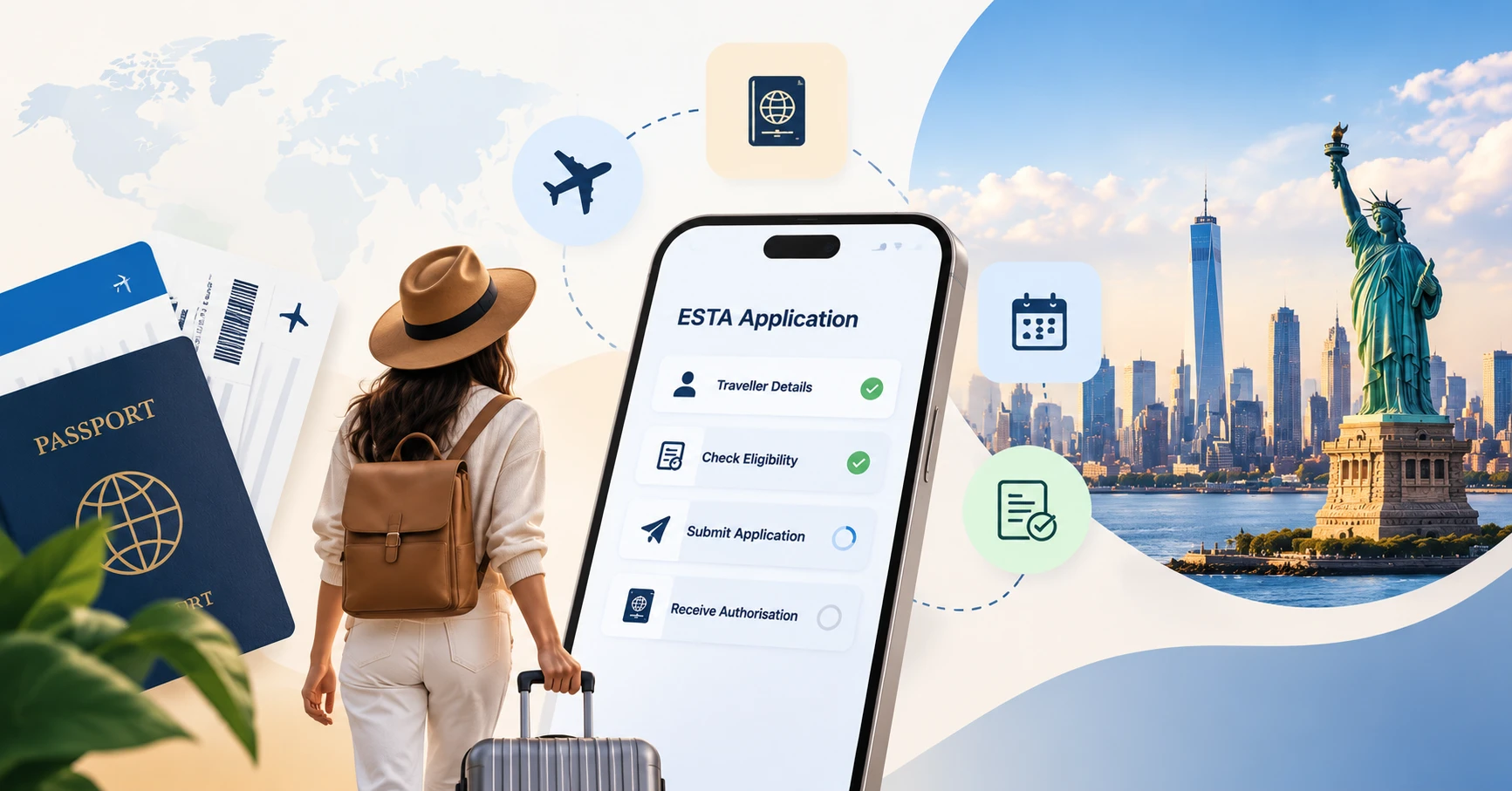
- Example 1: A UK passport holder flying to the US for tourism applies online for an ESTA, the US equivalent of an ETA.
- Example 2: An Indian passport holder visiting France for a conference applies for a Schengen visa at the consulate.
Common Traps to Avoid
- Transit authorizations: Some countries require one even if you never leave the terminal.
- Dual nationals: Travel on the passport that matches the entry requirements you are relying on.
- Passport validity: Many destinations require your passport to be valid for six months beyond your date of entry.
If you want to know how visa requirement checks work on travel sites, the principle is the same. Three inputs, passport, destination and purpose, are all it takes to determine whether you need an ETA, an eVisa or a full visa.
How Does an AI Assistant Answer It Instantly?
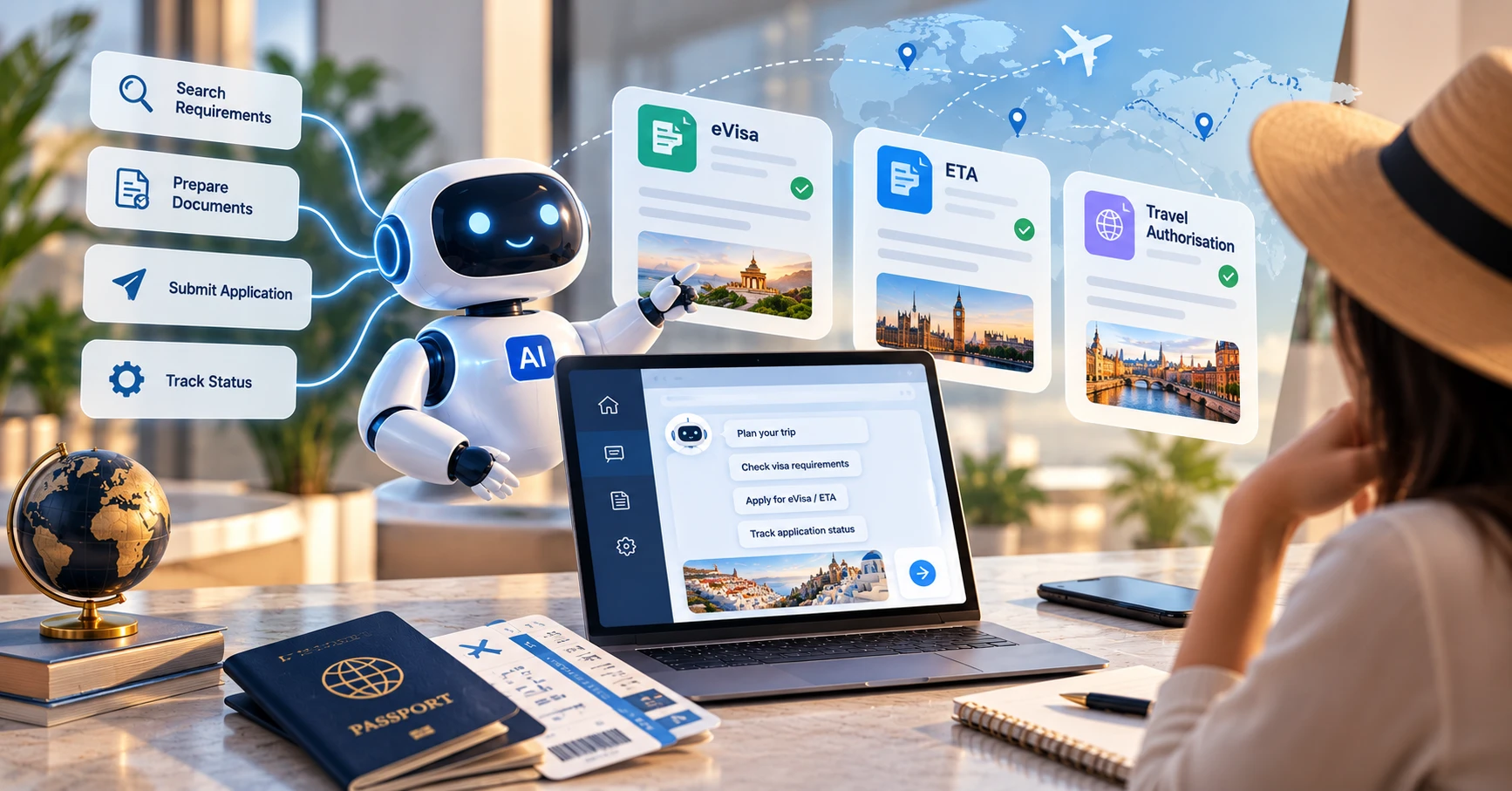
An AI assistant simplifies the “Do I need a visa?” question by acting as a visa checker. The process starts with three inputs: a passport scan, the destination, and the travel dates.
The assistant then matches the traveler against the official entry rules. Rather than generic advice, it states the exact rule, whether an ETA, an eVisa or a full visa is required, and pre-fills the form with the traveler's details.
That removes the manual searching and reduces the room for error. A UK passport holder traveling to Canada for tourism would be told they are eligible for an eTA, citing the Canadian rules.
An Indian passport holder heading to France would be directed to apply for a Schengen visa, with a link to the correct consulate.
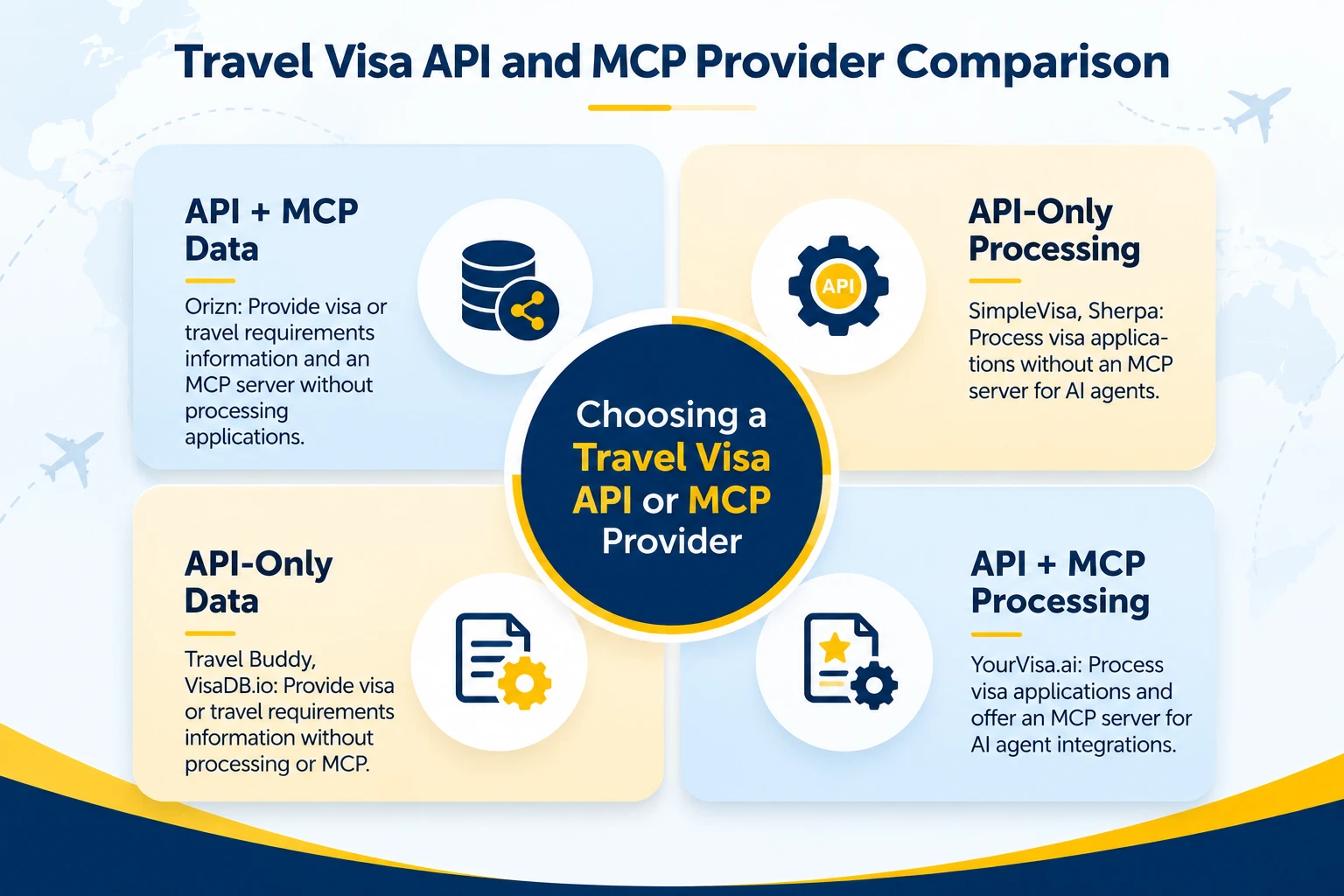
The assistant's strength is combining compliance with convenience. It does not just answer the question, it gets the traveler ready to act. Travel companies can embed the same answers in an AI travel assistant built on MCP, so the answers stay consistent across booking flows.

For enterprise deployments, the underlying Visa Services API for Travel Assistant connects official entry-requirement data with agency systems to provide eligibility checks and application automation at scale.
When to Double-Check with an Embassy
Even with modern visa portals and AI assistants, there are still cases where only the embassy or consulate can give you a definitive answer.
A business trip in particular can carry requirements that go beyond the usual tourism rules, so it is worth checking directly.
If you have had a previous refusal or an overstay, check with the embassy before reapplying. An unusual route, such as transiting a country with strict entry rules, can trigger a visa requirement that automated systems do not pick up.
Embassy staff can also give clarity on edge cases such as dual nationality or passport validity. The short version: if your trip is complex, or involves a past complication, check directly with the embassy rather than finding out at the airport.

FAQs
Do I need a visa or an ETA for the UK?
It depends on your nationality. Visa-exempt travelers need to apply for the UK's ETA (Electronic Travel Authorisation); others need a visa. Always check the UK government's official rules for your nationality and purpose of travel.
What is an eVisa?
An eVisa is a full visa that you apply for online. You still submit supporting documentation and wait for approval from the country in question; it is simply done electronically rather than on paper. India's e-Visa and Vietnam's eVisa are examples.
Is an ETA the same as a visa?
No. An ETA is a quick online pre-approval for visa-exempt travelers, such as the US ESTA or the Canada eTA. A visa is a formal authorization that usually involves a consular application and an interview.
Ask About Your Trip Now
Tell the YourVisa AI assistant your passport and destination, and get the answer and the application in one chat. It is the fastest way to confirm what your trip needs and start the process.