Travel Technology
ETIAS API: Building for Europe's Travel Authorization Before It Launches
The EU has not confirmed an ETIAS start date and has stated it will announce one several months ahead of enforcement. That uncertainty makes it essential to design your ETIAS API integration now.
You can ship the eligibility checks, the traveler messaging and the data capture right now, with submission itself still gated until the official system goes live.
That way, you are ready to go without expensive re-engineering when Brussels finally sets a date.
A travel authorization API for OTAs enables you to ship the first three without having to wait for Brussels. That gives the traveler clarity and gives your business resilience.
By treating ETIAS as a configurable module, you can adapt to changing timelines, keep the traveler informed and go live with submission only when the EU confirms the system is operating.
Build now: set the eligibility flag, add the checkout messaging, capture the traveler data and keep the submission behind a feature flag.
On launch day, flip on the submission and status updates. During the transition period, show soft warnings to the traveler to get them ready. On enforcement, apply the hard check. Once ETIAS is live, the EU fee is €20 per traveler.

Where Does ETIAS Stand Right Now?
Current Status
The European Travel Information and Authorisation System is not in operation. The EU is not collecting applications, and it has said it will announce the ETIAS launch date several months before enforcement begins.
This ongoing ETIAS delay has shifted the timeline several times since the system was legislated in 2018.
Who Needs ETIAS
ETIAS is designed for citizens of visa-exempt countries entering 30 European countries for short stays (up to 90 days within any 180 days).
For example, ETIAS for US citizens means that Americans traveling for tourism, business or transit will need authorization before boarding. Travelers who already require a Schengen visa, EU citizens, and residents with EU permits are exempt.
ETIAS Requirements
Applicants complete an online application, provide their passport details, answer a set of security questions and pay the fee.
Border guards will check the ETIAS against the passport to speed up entry and reduce the number of refusals.

Cost and Validity
The fee is €20 per applicant aged 18 to 70; applicants under 18 and over 70 are exempt. Once approved, the ETIAS is valid for three years or until the passport expires, whichever comes first. It permits multiple entries but is still subject to the 90/180 rule.
For official updates, see the European Commission's ETIAS page.
What Can an ETIAS API Do Before Launch?
An ETIAS API is not simply about submitting once the EU system goes live. It is also about preparing your platform today.
By building early, you can complete the key pre-launch work that keeps traveler flows smooth and compliance straightforward.
- Eligibility by nationality: The API can check whether the traveler's passport is from a visa-exempt country and flag only those who will require ETIAS.
- Schengen route detection: It can identify itineraries that enter any of the 30 European countries that will require ETIAS, so travelers know when it applies.
- Traveler messaging: Clear messaging can be displayed at checkout to the effect that ETIAS will be required in future, which avoids confusion and reduces support calls.
- Data capture: Capturing passport details means you are ready to submit as soon as the EU portal goes live, with no need to rework your booking flow.
- Readiness reporting: Your internal dashboards can track how many of your upcoming travelers will require ETIAS, giving your ops team visibility before enforcement.

By treating ETIAS as a configurable module, your API integration stays robust. You can ship eligibility, messaging and data capture now and keep the submission and status update functionality behind a feature flag until Brussels confirms the start date.
That means your OTA or platform is ready for the transition period with soft warnings, and ready for enforcement with hard checks, without costly re-engineering.
How Should an ETIAS API Integration Be Built?
Designing an ETIAS API means designing for the unknown while still keeping the traveler flow smooth.
The safest approach is to build around feature flags, config-driven rules and a webhook contract for status updates.
That lets you ship the eligibility checks and messaging now, with submission gated until the EU confirms the system is operating.

Key Principles
- Feature flags: Separate the phases (eligibility, messaging, submission) so you can turn each one on when you choose to.
- Config-driven rules: Store the requirements as data rather than code. When the ETIAS rules change, you update the config; no redeploy required.
- Webhook contract: Define a consistent webhook for status updates (submitted, approved, refused), so your platform is not relying on polling and the traveler can see where the application stands.
Timeline of ETIAS Integration Steps
- 01 Prepare before launch
Enable eligibility checks by nationality, add the checkout messaging, capture the traveler data and keep the submission behind a feature flag. - 02 Activate at launch
Turn on the submission flows, charge the €20 fee, and connect the webhook to receive the status updates (approval or refusal). - 03 Manage transition period
Display soft warnings in the booking flow to let the traveler know that ETIAS will be required soon, while the submission remains gated. - 04 Enforce after transition
Apply hard checks at boarding and at entry to ensure that ETIAS authorization is mandatory and is verified before travel.
By structuring your ETIAS API integration this way, you deliver clarity now, you avoid the cost of re-engineering, and you go live with submission only when Brussels confirms the start date.
The same tooling covers travel documentation for ETA and ETIAS, so one integration serves both. That means your booking engine does not need separate flows for the Canadian eTA, the UK ETA or the European ETIAS.
Instead, eligibility checks, traveler messaging and webhook status updates all go through the same API layer. That consistency reduces engineering effort, simplifies compliance, and gets the traveler the right message at the right time, no matter where they are going.
What Should OTAs Change in Checkout?
For online travel agents, checkout is where ETIAS readiness becomes visible to travelers. The most effective changes are subtle but clear:
- Badge: Add a small ETIAS badge or icon alongside itineraries that cross into the countries that will require it, to indicate that authorization will be needed. That is a clear signal without disrupting the booking process.
- Copy: Insert short traveler messaging ("ETIAS will be required for this trip once the EU system launches"). That makes the traveler aware of the requirement.
- Timing of the prompt: Place the notice at the right moment. A pre-payment prompt means the traveler sees it before they pay. You can use the confirmation email to repeat the message.
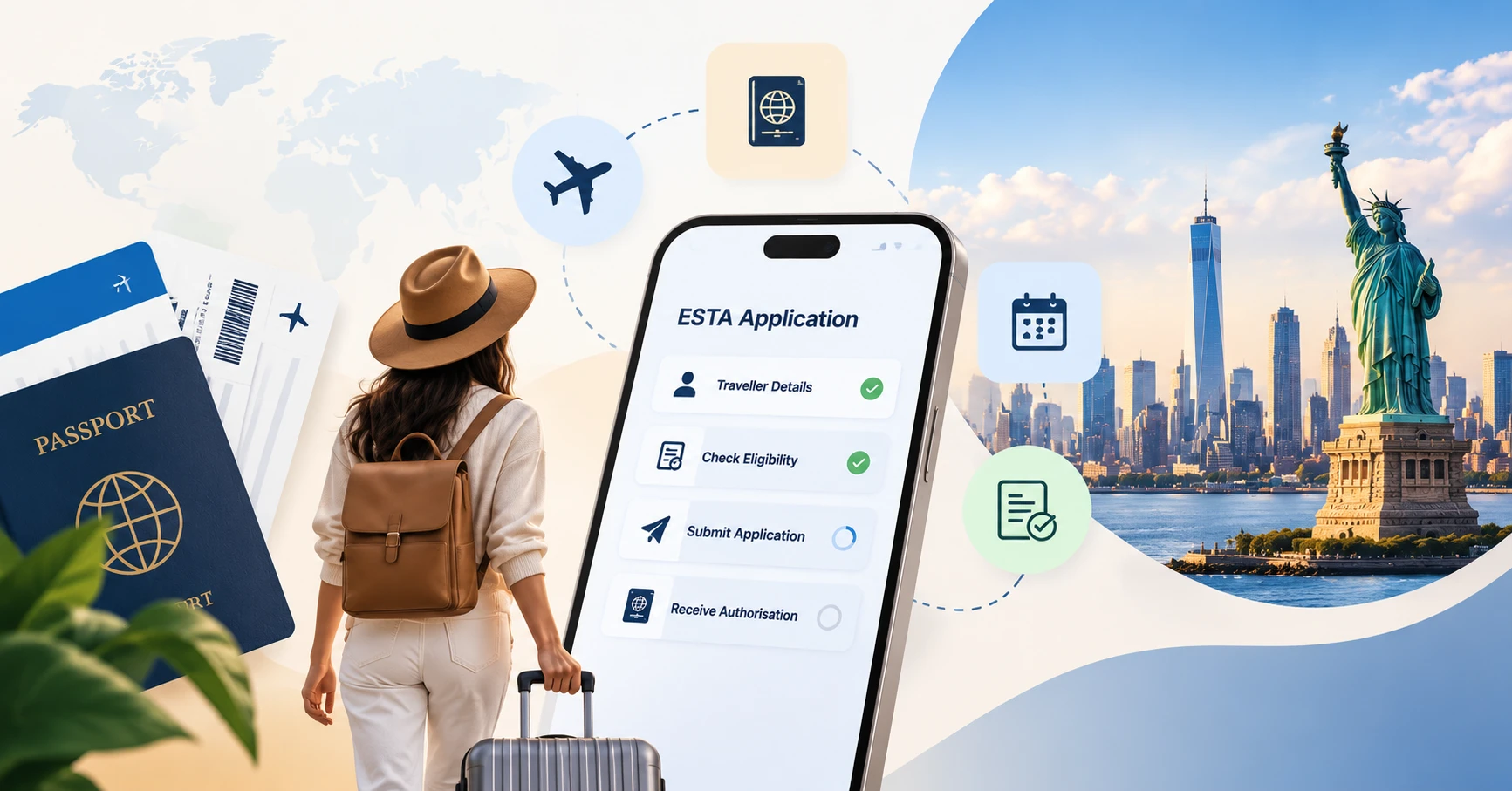
An ETIAS API for online travel agents handles this automatically. It can determine nationality, flag the routes that will require ETIAS and trigger the right badge and copy at checkout.
By dealing with eligibility, messaging and data capture at this stage, you remove confusion later and reduce the support burden.
These changes prepare the platform for the transition phase, where soft warnings are issued, and for the enforcement phase, where ETIAS becomes a hard check with a €20 fee.
If you are already running a visa API integration for OTAs covering both the eTA and eVisa, then ETIAS is just a new rule set. It is not a new build.
The same integration layer can deal with the eligibility checks, traveler messaging and webhook status updates for Canada (eTA), the UK (ETA) and Europe (ETIAS).

This single approach reduces engineering overhead, simplifies compliance, and gets travelers consistent, timely information wherever they are going.
For official updates, please see the official ETIAS website.
Mistakes to Avoid
When preparing for ETIAS, travel platforms need to avoid a few key pitfalls. First, do not hard-code a launch date into your system.
The EU has not confirmed when ETIAS will launch, and the timeline has shifted several times. A hard-coded launch date means another round of engineering work every time the date moves.
Second, do not tell travelers to apply before applications open. The European Commission has been clear on this point: ETIAS is not yet live, and no applications are currently being taken. Any such instruction would be misleading, would erode trust, and would drive support queries.
Third, do not link to unofficial ETIAS sites. Only the official EU site will host the applications, and links to other sites will confuse or potentially mislead travelers.

An ETIAS compliance API helps avoid these errors by making the rules configurable, gating the submission behind feature flags, and keeping the messaging in line with the official EU status. Your platform stays accurate and robust, and the traveler gets a clear experience.
FAQs
Is there an official ETIAS API?
No, the EU has not announced a public ETIAS API. Most platforms will build their own integration, treating the rules as configurable data and using webhooks for status.
When will ETIAS start?
The European Commission has not confirmed a launch date. It has said it will announce the date several months in advance, and ETIAS remains delayed.
Do US citizens need ETIAS?
Yes. Once it is live, ETIAS will apply to visa-exempt travelers, including US citizens, traveling to 30 European countries for short stays.
Be ETIAS-ready Before the Date Is Set
Map your Europe-bound bookings and turn on ETIAS messaging through a single API. You can run all the eligibility checks, traveler prompts and data capture today through one ETIAS API, and go live with submission the moment Brussels announces the date.