
Travel technology
ESTA API: What's Possible and What Isn't for Travel Platforms
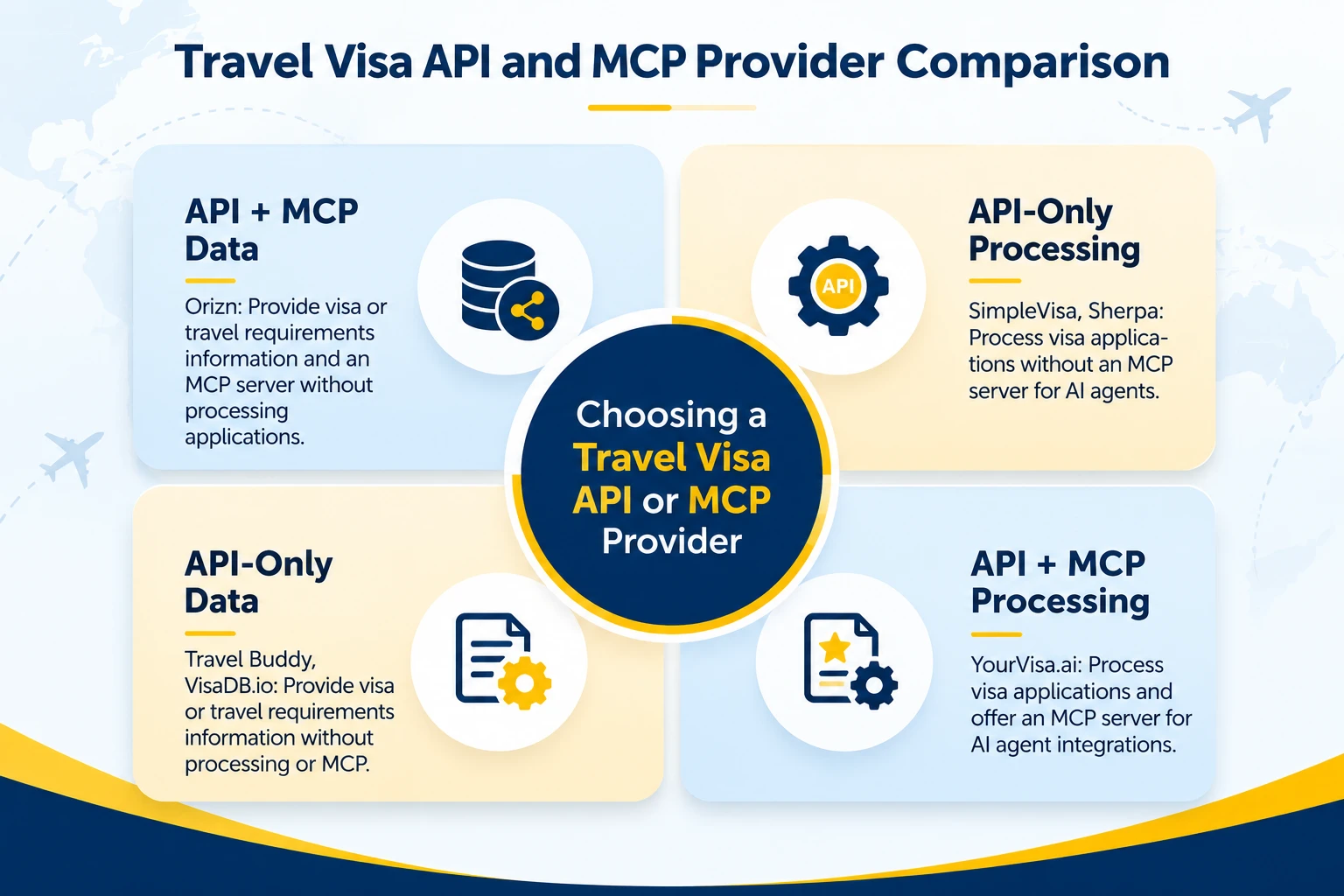
An ESTA API does not come from CBP, because CBP offers no public API. Any ESTA API a travel platform uses comes from a third-party provider.
These integrations can check whether a traveler needs an ESTA, capture and validate passport details, prefill the application and track its status. CBP makes the final decision, and only its system holds the official record.
That is what a travel visa API for booking platforms does at checkout. It speeds the process up while respecting the boundary that only CBP can issue decisions. These APIs cut manual effort, shorten turnaround and reduce errors in traveler submissions.
Platforms gain an edge by building compliance checks into the booking process, which builds trust and makes the whole thing more convenient. For developers the line is clear: automation does the heavy lifting, and the CBP portal remains the single source of truth.
So travel platforms can run instant eligibility checks, show requirement and fee details, prefill traveler forms, validate documents and provide status updates for applications the provider manages.

They cannot deliver an official decision, run a CBP status lookup for any traveler, or bypass CBP's mandatory questions.
ESTA Basics a Product Team Needs
The ESTA requirements are the foundation here. An ESTA is required of visitors from Visa Waiver Program countries coming to the US for short stays, whether for tourism, business or transit.
Every traveler, including children, must submit their own application before travel.
Cost and Validity
The ESTA fee rose to US $40 on 30 September 2025 and has since been adjusted for inflation, standing at US $40.62 from 16 October 2026. It covers system operations, CBP processing and tourism promotion. An approved ESTA is valid for two years, or until the traveler's passport expires, whichever comes first, and allows multiple entries during that period.

ESTA is not a universal solution. Anyone staying longer than 90 days, anyone intending to work or study, and anyone who has travelled to a restricted country such as Iran or North Korea will need a visa instead.
Product teams need to make the difference between ESTA eligibility and visa requirements obvious on the platform, and point users to the right path.
For full details, see CBP's Visa Waiver Program page.
What Can an ESTA API Do?
An ESTA API lets a travel platform automate the routine parts of the process, with the decision still resting with CBP.
Working with a provider, you can automate data capture, validation and reminders, so travelers complete the application correctly and on time.
An API for ESTA application can prefill passport details, flag errors before submission, and provide status updates for applications the provider manages.
CBP keeps full control of approvals. No API gets around CBP's mandatory questions, and none can deliver an official decision.

Design the workflow to balance automation with transparency, so it is always clear where CBP's authority begins.
Tasks: Automatable vs. CBP-Controlled
- Eligibility check: Automatable via API: Yes. Stays with CBP: No.
- Requirement and fee data: Automatable via API: Yes. Stays with CBP: No.
- Prefilled forms: Automatable via API: Yes. Stays with CBP: No.
- Document validation: Automatable via API: Yes. Stays with CBP: No.
- Status updates (provider-handled applications): Automatable via API: Yes. Stays with CBP: No.
- Official decision: Automatable via API: No. Stays with CBP: Yes.
- CBP status lookup for any traveler: Automatable via API: No. Stays with CBP: Yes.
- Mandatory CBP questions: Automatable via API: No. Stays with CBP: Yes.
With those boundaries defined, a product team can use a travel authorization API to improve the experience while staying inside CBP's rules.
What Can't an ESTA API Do?
Even a sophisticated automated ESTA processing API has limits. It can handle data capture, validation and reminders.

It cannot make the official decision, guarantee approval, or run an ESTA status check on an application submitted through a different system.
CBP alone decides whether to grant an ESTA, and its portal is the only authoritative source.
Boundaries of Automation
- No decision authority: APIs cannot replace CBP's judgment.
- No universal lookup: they cannot access or verify applications submitted directly on CBP's site.
- No shortcuts: travelers still answer CBP's mandatory eligibility questions themselves.
Third-Party Filing Rules
CBP has repeatedly warned travelers about unofficial ESTA websites that charge extra fees or misrepresent themselves.
For platforms, disclosure and transparency are what matter. Be clear that you are not CBP, be up front about the government fee, and make it plain that you will not answer eligibility questions on the traveler's behalf.
The response format is the same as what a travel visa API returns for any other destination: structured data, status updates, workflow automation. It is never the decision itself.
For definitive guidance, travelers should always use the official ESTA application site.
Where Should the ESTA API Sit in a Booking Flow?
A travel authorization API works best embedded at the right points in the journey. A well-planned ESTA API integration for travel platforms puts the compliance checks where they don't disrupt the booking.
- Search stage: soft badge
During search and browse, the API can show a badge indicating that a destination requires an ESTA. It nudges the traveler to plan ahead without interrupting the browsing. - Checkout: hard requirement check
At checkout the API runs the eligibility check, confirming whether an ESTA applies and which documents are needed. This step is time-critical, since a slow check costs you the cart. - Post-booking: application link
Once the booking is confirmed, the API provides a direct link to start and continue the application. That keeps the compliance steps inside the platform, reduces support calls, and stops the traveler getting lost between systems. - Pre-departure: 72-hour re-check
Finally, the API can trigger a reminder and re-check 72 hours before departure, confirming a valid ESTA is in place and heading off the panic at the airport.
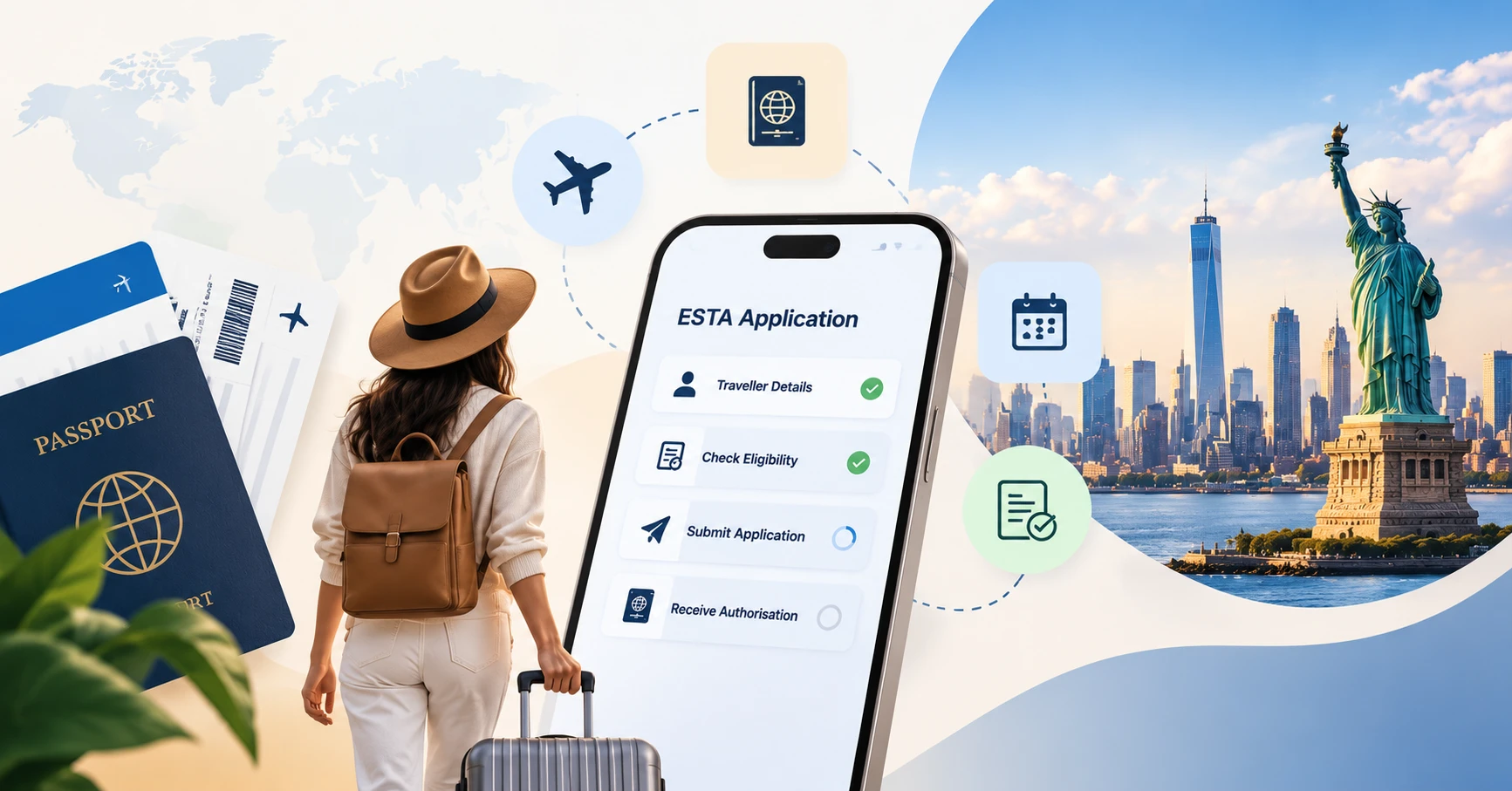
Placed at these four stages, the API turns authorization from a disjointed task into part of the booking. Set that against the cost of building visa processing in-house, including the maintenance when CBP changes its form, and the value of a provider-managed integration becomes clear.
Questions to Ask an ESTA API Provider
When assessing providers, the question that matters is how it actually works, not what the technical promises say. A short checklist keeps the integration reliable, transparent and traveler-friendly.
- Confirm the data refresh cycle. Ask how often requirement and fee data are updated, and whether the provider monitors CBP for changes in close to real time.
- Check error handling. Ask how errors come back: the code structure, the remediation steps, the escalation path.
- Review disclosure wording. Make sure the provider's traveler-facing language distinguishes it from CBP and avoids misleading claims.
- Verify fee transparency. Confirm the government fee is shown separately from service charges, so the traveler sees what they are paying for.
- Ask about webhooks. Check whether the API supports webhooks for status updates, which is what lets you automate reminders and notifications.
- Test in a sandbox. Look for a developer sandbox with sample responses, so your team can validate the workflow before going live.

That checklist points you to a provider that can absorb compliance changes, communicate clearly with travelers, and integrate without drama.

FAQs
Is there an official ESTA API?
No. CBP does not provide a public ESTA API. Any integration a travel platform uses comes through a third party, which can automate parts of the process but cannot replace CBP's authority.
Can a travel platform apply for an ESTA for a traveler?
A platform can guide the traveler, prefill data and validate documents, but the traveler still answers CBP's questions. Submission and final approval sit with CBP.
What does an ESTA cost?
US $40.62 since 16 October 2026, following the rise to $40 on 30 September 2025 and two inflation adjustments. It covers CBP processing, system operations and tourism promotion, and each traveler pays it, children included.
Moving Forward: Add ESTA Checks to Your Checkout
Integrate an ESTA API into your booking flow so travelers confirm eligibility before they pay.
Test ESTA compliance on your main US routes in the YourVisa.ai sandbox and see what automated checks do for friction and trust.
Compare the results, refine the flow, and you have something you can scale.