AI travel agent
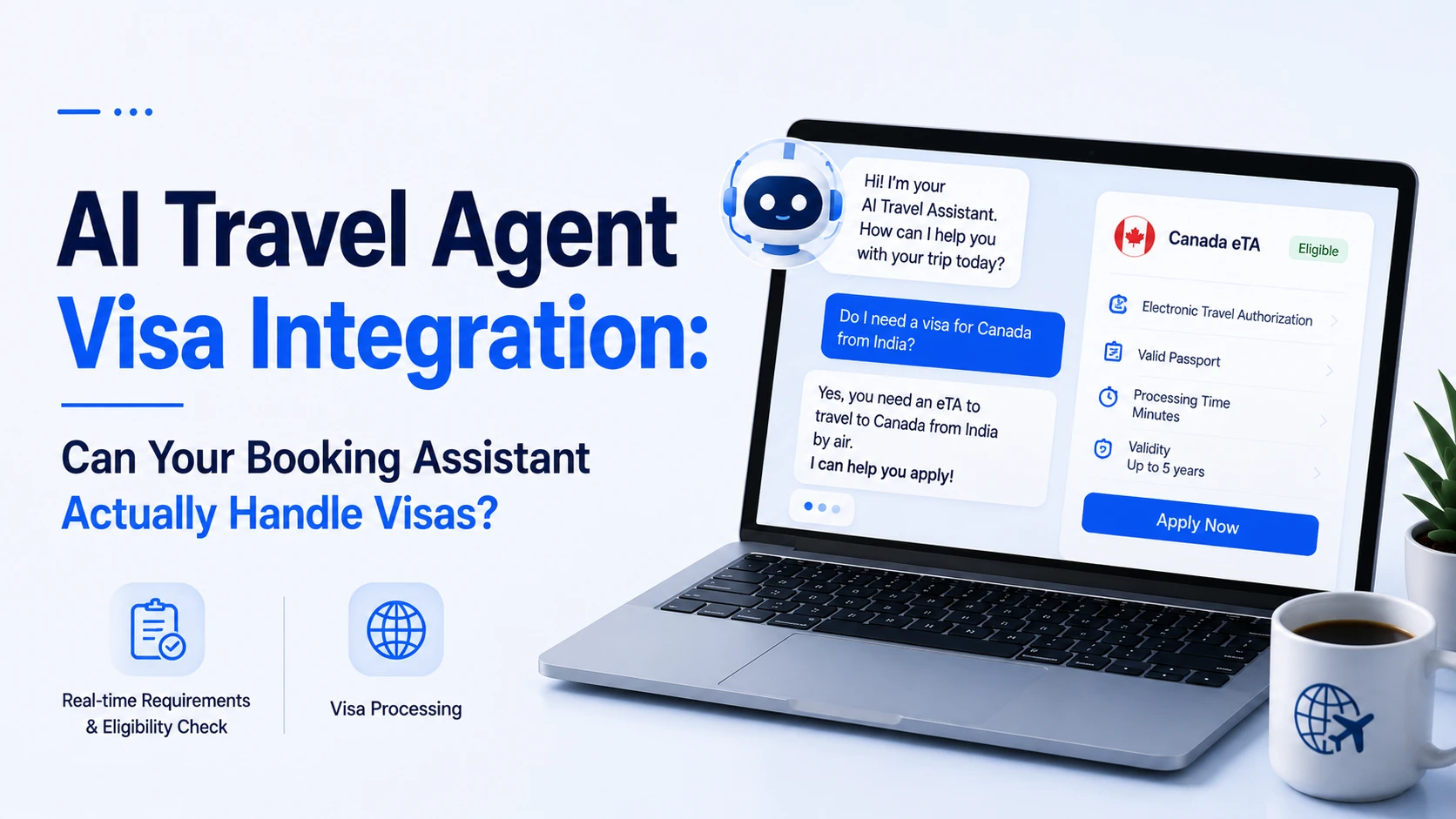
AI Travel Agent Visa Integration: Can Your Booking Assistant Actually Handle Visas?
Introduction – Beyond Chat: Why Visa APIs Matter
An AI travel agent can already check visa requirements, pull document lists and even pre-fill applications. What it cannot responsibly do is submit them without the traveler's confirmation.
That distinction is the honest answer to "can your booking assistant actually handle visas?" Making it work end to end means wiring the agent into a real travel visa booking-flow integration, not a static FAQ script bolted onto a chat window.
This isn't theoretical. iVisa's Vee and VFS Global's ViVA are live AI visa assistants handling parts of this today. The difference lies in the integration.
Booking assistants connected to a live API return current, checkable data. Text-only bots risk giving old or incorrect answers.
In practice, the integration underneath matters far more than the chat interface on top. Only a live visa API gives you accuracy, compliance and traveler confidence.
Let's look at how AI travel agents handle visas, starting with what AI travel agent visa integration actually involves.
What Today's AI Visa Assistants Actually Do (With Real Examples)
iVisa's "Vee"
Background: iVisa merged with HelloGov in July 2026, forming one of the largest AI-powered consumer passport and visa platforms.
Key Capabilities:
- Uses a continuously updated database of global visa requirements.
- Provides AI-assisted guidance, error-checking and document-list generation, asking follow-up questions and flagging common mistakes as the traveler goes.
- Pre-fills visa applications based on traveler inputs, which removes most of the manual effort.
Scale: The combined HelloGov/iVisa platform expects to process more than 1.5 million passport and visa applications annually across more than 100 destinations.
Key Value: Vee shows how AI can handle the "front end" of visa applications: requirements, documentation and pre-submission preparation. A human still checks every application before it is submitted.
VFS Global's "ViVA"
Background: VFS Global is one of the world's largest visa outsourcing and technology providers, running visa application centres on behalf of client governments across a large part of the world.
Capabilities:
- ViVA uses AI to simplify the visa process for applicants.
- Guides applicants through requirements, documentation and appointments.
- Provides real-time answers and reduces the errors that cause delays.
Recent Step: In early 2025, VFS Global launched a generative-AI chatbot for UK visa applicants across 141 countries, built to give instant, accurate answers on requirements and the application process.
Key Value: ViVA shows how AI can improve speed and clarity while keeping compliance and human oversight in place.
Why AI Travel Agent Visa Integration Matters More Than Chat
- Chat-only bots risk outdated or incorrect answers if they rely on static scripts.
- API-connected assistants like Vee and ViVA return checkable data that comes directly from live visa systems.
- The integration layer (visa API or MCP server) is what makes these assistants reliable, scalable and compliant.
Chatbot vs. Connected Agent: Why the Difference Matters
A scripted FAQ bot may look helpful at first glance. Its limitations show up quickly.
From Static Scripts to Live Connections
Chatbots that rely on pre-written answers can only repeat what was programmed. As visa rules evolve, those responses go stale, leaving travelers with incomplete guidance.
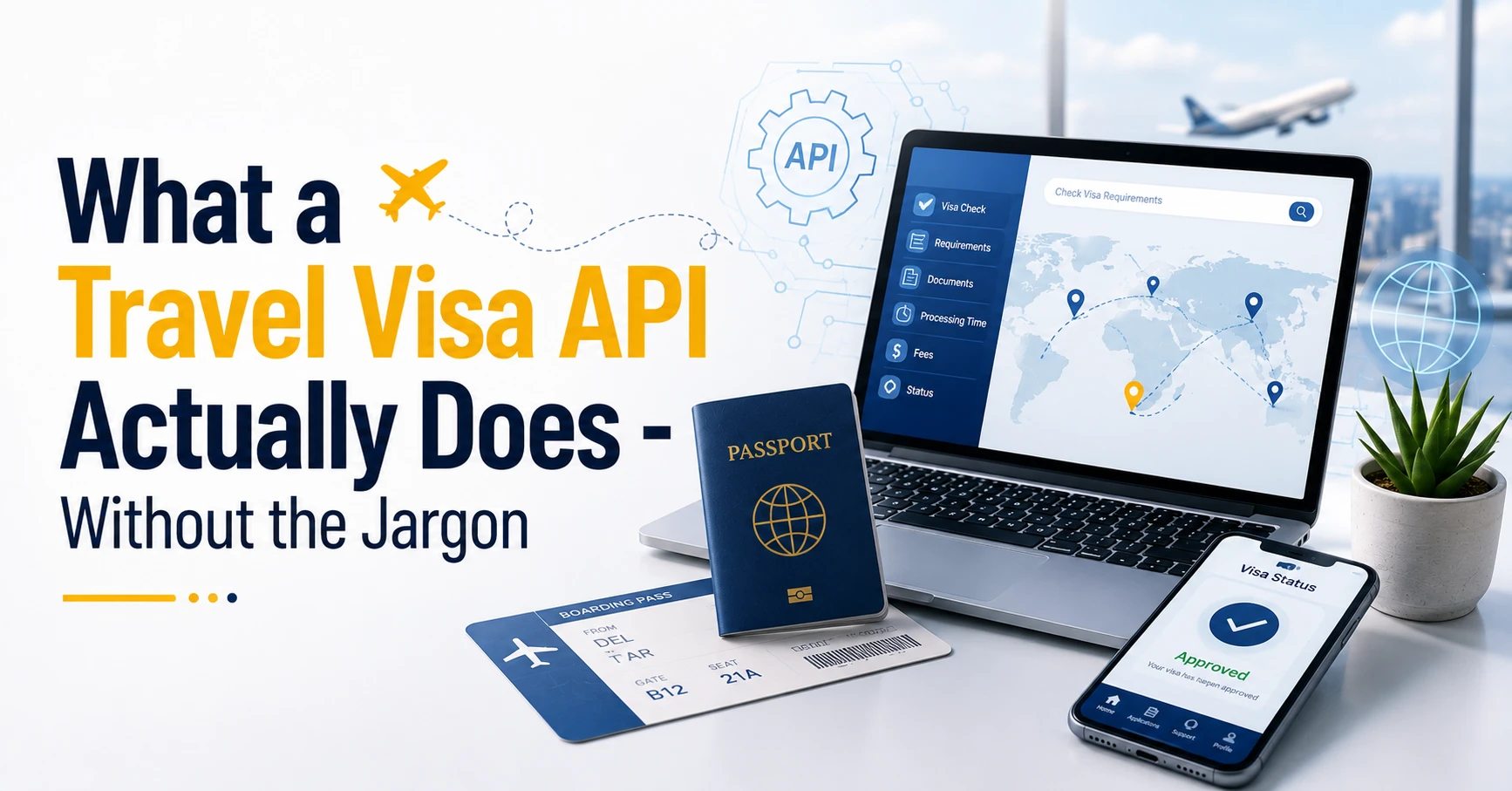
A connected agent, by contrast, is wired into a live AI travel agent visa API and MCP server. That connection layer turns the assistant from a digital FAQ into a dynamic tool that adapts as real-time visa data changes.
Real-Time Data Builds Trust
Instead of reciting canned text, a connected agent can check requirements instantly, generate updated document lists and even pre-fill applications with current data.
Crucially, it can surface checkable sources, which gives travelers confidence that the information is accurate and compliant.
This transparency is the difference between a chatbot that "sounds helpful" and an agent that actually reduces risk in the visa process.
Integration Makes Agents Future-Ready
The AI travel agent visa integration distinction isn't merely technical. It is practical. A chatbot sits outside the booking flow; a connected agent becomes part of it.
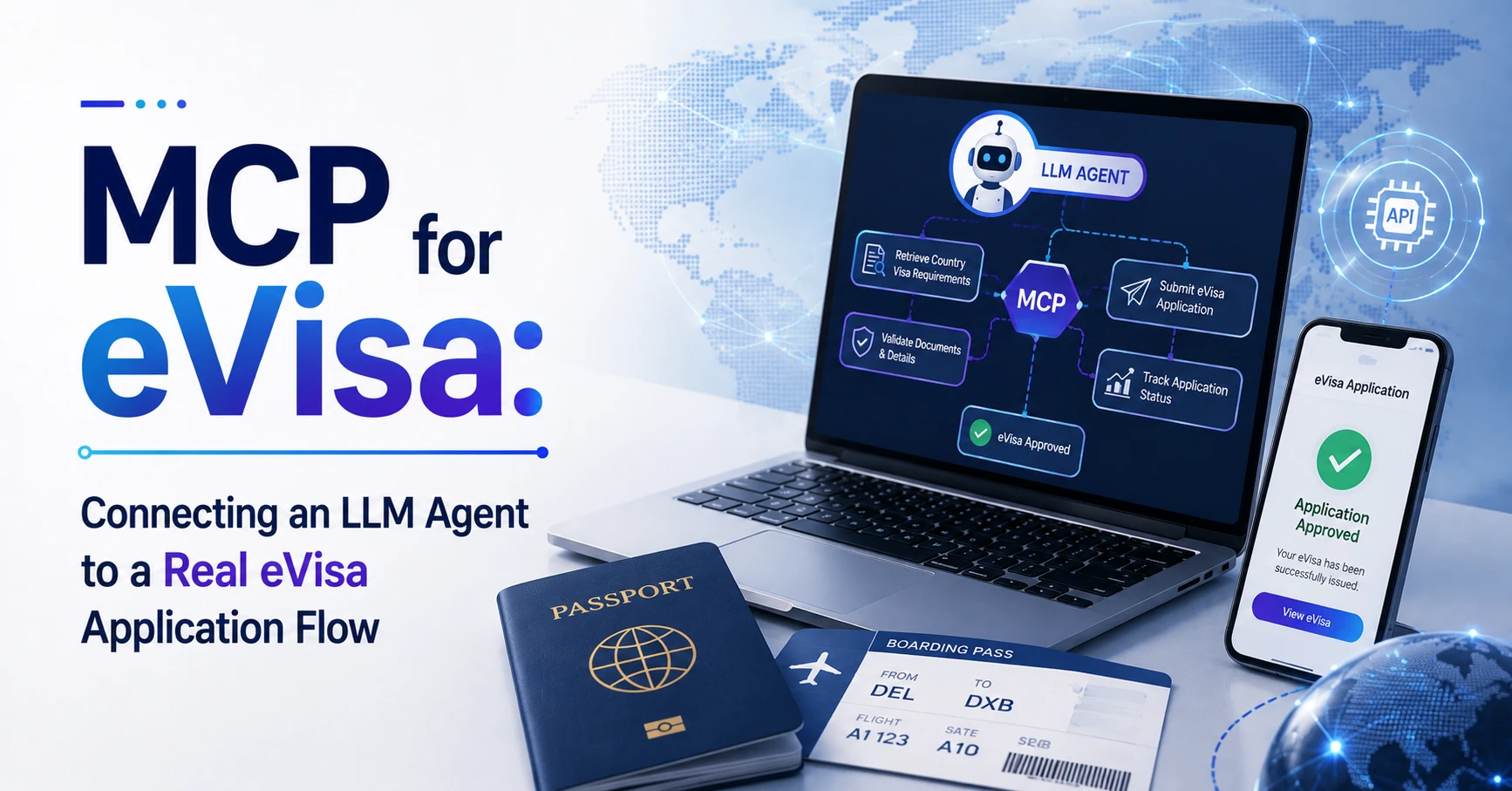
The MCP layer handles responsible discovery and use of visa tools, while still gating final submission behind human confirmation.
That blend of automation and oversight makes connected agents trustworthy, and ready for the future of travel compliance.
Skift's State of Travel research tracks how quickly AI is being adopted across the industry, and AI-assisted, agentic travel booking is now a mainstream category.
Chatbot vs. Connected Agent
- Data Source
Chatbot (Scripted FAQ): Static, pre-written answers.
Connected Agent (API/MCP-Wired): Live visa API / MCP server. - Accuracy
Chatbot (Scripted FAQ): Risks outdated or incomplete guidance.
Connected Agent (API/MCP-Wired): Real-time, checkable, compliant data. - Functionality
Chatbot (Scripted FAQ): Digital FAQ outside the booking flow.
Connected Agent (API/MCP-Wired): Integrated into the booking flow with automation. - Traveler Confidence
Chatbot (Scripted FAQ): Limited: "sounds helpful" but unverified.
Connected Agent (API/MCP-Wired): Transparent, sources surfaced, builds trust. - Future Readiness
Chatbot (Scripted FAQ): Stale scripts, not scalable.
Connected Agent (API/MCP-Wired): Scalable, trustworthy, human-gated submission.
What Can Be Automated Responsibly vs. What Still Needs a Human
Some visa tasks can be safely automated. Others must remain human-checked for compliance and accountability.
- Eligibility check: Agent, automatically
- Document checklist: Agent, automatically
- Pre-filling the application: Agent, automatically
- Final submission: Human confirms, agent executes
- Dual nationality / criminal history disclosures: Human, always
- Biometric appointment booking: Human, always
Automation works best for repetitive, rules-based steps: checking eligibility, generating document lists and pre-filling visa forms.
These tasks benefit from speed and consistency, and they reduce manual effort and errors. But when it comes to sensitive disclosures, biometric appointments or the final act of submission, a human checkpoint is essential.
The MCP layer lets agents discover and call visa tools responsibly, while the critical steps stay behind traveler confirmation.
Agencies running this at scale across many travelers eventually need more than an in-chat check. They need a visa management platform built for agencies to track every application behind the scenes.
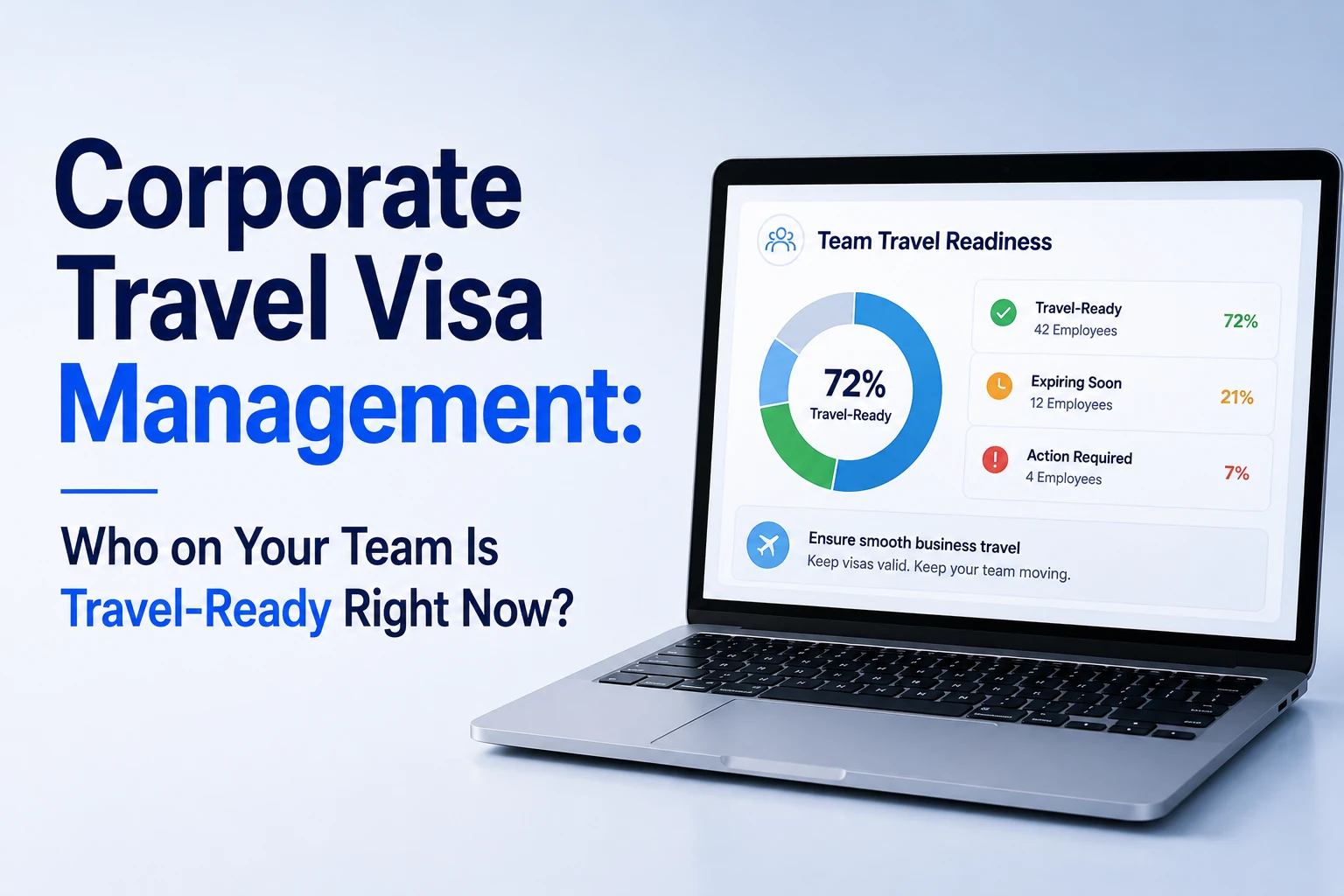
The same AI travel agent visa integration pattern applies inside companies too. It surfaces which employees on a travel roster are actually travel-ready before a trip is booked.
How to Add This to an Existing Booking Assistant?
You don't need to build a new assistant from scratch. Adding visa capability is about wiring in the right layers.
Connect to a Visa API or MCP Server
The foundation is a live data connection. Without it, your assistant is just a static FAQ bot. An MCP server acts as the discovery and orchestration layer, so the agent can call visa tools responsibly and return checkable, current data.
Define a Human Confirmation Step
Automation can handle eligibility checks, document lists and pre-filled forms. The final submission must always be gated by traveler confirmation.
Build this checkpoint directly into the conversation flow, so the assistant pauses and asks for explicit approval before executing.
Implement Error Handling for Edge Cases
Not every traveler is a standard case. Dual nationality, criminal-history disclosures or biometric requirements can trigger exceptions.
Your assistant should detect these scenarios and route them to human handling rather than attempting automation. Clear error messaging builds trust and prevents compliance risks.
By layering these three elements (API/MCP connectivity, confirmation logic and error handling) you can extend an existing booking assistant into a reliable visa-capable agent without reinventing the whole system.
Scripted Visa Chatbot vs. API/MCP-Connected AI Travel Agent
- Data Freshness
Scripted Chatbot: Static, manually updated.
API/MCP-Connected AI Agent: Live, pulled per query. - Application Submission
Scripted Chatbot: Not possible.
API/MCP-Connected AI Agent: Yes, with human confirmation. - Handling Edge Cases
Scripted Chatbot: Poorly: fixed scripts only.
API/MCP-Connected AI Agent: Better: flags for human review. - Examples Live Today
Scripted Chatbot: Generic FAQ widgets.
API/MCP-Connected AI Agent: iVisa's Vee, VFS Global's ViVA.
Moving Forward: Wire Your Booking Assistant into a Real Visa API
We've covered how AI travel agents handle visas. The next step is giving your AI travel agent live visa data to work with.
YourVisa.ai's API and MCP integration power real requirement checks and application flows, not scripted answers.
With a direct connection, your assistant can move beyond static FAQs and deliver accurate, checkable results inside the booking flow.
See the API your AI Agent can Call →
FAQs
Can an AI travel agent actually submit a visa application?
Technically yes, if it's connected to a live visa API or MCP server. Responsible implementations keep a human confirmation step before final submission.
Are AI visa checkers like Vee and ViVA available to any travel platform, or only their own apps?
Vee (iVisa) and ViVA (VFS Global) are designed for their own ecosystems. A travel platform that wants visa capability needs to connect to its own visa API or MCP layer. Relying on a competitor's assistant won't scale.
How accurate is an AI travel agent's visa information?
Accuracy depends entirely on what's behind it. An agent connected to a live, regularly updated visa API is far more reliable than one trained on static text that can go out of date.
What happens if an AI travel agent gets visa requirements wrong?
This is exactly why a human confirmation step matters before submission. The primary data source (a maintained API, not a static script) is the real risk factor to assess.
Does adding AI travel agent visa integration require rebuilding a booking assistant from scratch?
No. It means connecting an existing assistant to a visa API or MCP server and adding a confirmation step in the conversation flow, not building a new assistant.